Peer support in addiction recovery is one of the most powerful — and most overlooked — tools for building a life free from drugs and alcohol. While therapy, medication, and structured treatment all play essential roles, the people you surround yourself with every day often determine whether recovery feels sustainable or impossible. Human beings are wired for connection, and that wiring doesn’t switch off when someone decides to get sober. In fact, it becomes more important than ever.
This article explores why positive peer influence matters so much in sobriety, what the research says about recovery communities, the different forms peer support can take, and practical steps for building a sober support network that genuinely helps you stay on track.
Why Peers Matter So Much in Recovery
Addiction is often described as a disease of isolation. Substance use tends to shrink a person’s world: relationships fray, trust erodes, and eventually the substance becomes the primary “relationship” in someone’s life. Recovery reverses that process — and it can’t be done alone.
There’s a well-known saying in recovery circles: “The opposite of addiction is connection.” While the science is more nuanced than a single slogan, the core idea holds up. People who feel connected, supported, and accountable to others are far more likely to maintain sobriety than those who try to white-knuckle it in isolation.
Positive peer influence works on several levels at once:
Accountability. When people know you and care about your recovery, it becomes harder to quietly slip back into old patterns. A sober friend who expects to see you at Thursday’s meeting is a gentle but real form of accountability.
Modeling. Watching someone with three, five, or twenty years of sobriety live a full, meaningful life provides something no pamphlet can: proof that recovery works. Peers model coping skills, honest communication, and healthy routines in real time.
Belonging. Shame thrives in secrecy. Sitting in a room (or a group chat) with people who have lived through the same struggles dissolves the sense of being uniquely broken. Belonging is a basic human need, and meeting it in a sober context removes one of the biggest drivers of relapse.
Hope. Early recovery can feel bleak. Peers further along the path are living evidence that cravings fade, relationships heal, and joy returns.
What the Research Says About Peer Support in Addiction Recovery
Peer support isn’t just a feel-good concept — it’s backed by a growing body of evidence. Studies on mutual-aid groups, peer recovery coaching, and sober living environments have consistently found that people engaged in peer-based recovery support tend to have:
- Higher rates of sustained abstinence over time
- Lower rates of relapse and rehospitalization
- Improved relationships with family and treatment providers
- Greater treatment retention and engagement
- Higher overall satisfaction with life in recovery
Researchers point to a concept called recovery capital — the total resources a person can draw on to start and sustain recovery. Social recovery capital, which includes supportive friendships, family relationships, and community ties, is one of its strongest components. Every positive peer relationship you build is a deposit into that account, and it pays dividends precisely when you need it most: during cravings, crises, and difficult life transitions.
It’s also worth noting what the research says about the flip side. Spending significant time with people who are actively using is one of the most reliable predictors of relapse. Peer influence is a two-way street, which is why being intentional about your social circle matters so much in early sobriety.
Forms of Positive Peer Support in Sobriety
Peer support comes in many shapes, and there’s no single “right” version. Most people in long-term recovery combine several of the following.
12-Step Fellowships and Mutual-Aid Groups
Alcoholics Anonymous (AA), Narcotics Anonymous (NA), and similar fellowships are the most widely available form of peer support in the world, with free meetings in nearly every community. Alternatives like SMART Recovery, Refuge Recovery, LifeRing, and Women for Sobriety offer secular or differently structured approaches. What they all share is the core mechanism: people in recovery helping each other, one conversation at a time.
Sponsorship — pairing a newer member with a more experienced one — adds a deeper layer of one-on-one mentorship and accountability within these fellowships.
Sober Living Homes
Sober living homes (also called recovery residences) take peer support and make it a 24/7 lifestyle. Residents live together in a substance-free environment, share household responsibilities, attend house meetings, and hold each other accountable to house rules and recovery commitments.
For many people leaving treatment, a sober living home bridges the gap between the structure of rehab and the freedom of independent living. The peer dynamic is central: housemates notice when someone is struggling, celebrate milestones together, and model day-to-day sober living skills like cooking, budgeting, working, and handling stress without substances.
Peer Recovery Coaches and Specialists
Certified peer recovery specialists are people with lived experience of addiction who receive formal training to support others. They work in hospitals, treatment centers, recovery community organizations, and increasingly through telehealth. Unlike therapists, their credibility comes from having walked the same road — which makes them uniquely effective at engaging people who distrust traditional systems.
Recovery Community Organizations and Sober Events
Many cities have recovery community centers offering sober social events, volunteer opportunities, recreational leagues, and workshops. Sober meetups, recovery-friendly gyms, sober travel groups, and alcohol-free festivals are growing rapidly. These spaces answer a crucial question in early recovery: “What do I actually do for fun now?” — and they answer it alongside people asking the same thing.
Online Recovery Communities
For people in rural areas, those with mobility or schedule constraints, or anyone who simply prefers digital connection, online peer support has exploded. Video meetings, recovery apps with community features, moderated forums, and social media groups make peer support available at 3 a.m. when a craving hits and no in-person meeting is running. Online support works best as a supplement to — not a total replacement for — face-to-face connection, but for many people it’s the doorway that leads there.
How Positive Peer Influence Actually Changes Behavior
It helps to understand the mechanics of why sober peers are so protective. Psychologists describe several overlapping processes:
Social Norms Reset
Humans unconsciously calibrate “normal” based on the people around them. If everyone in your circle drinks heavily, heavy drinking feels ordinary. Surround yourself with people who handle stress by calling a friend, going for a run, or hitting a meeting, and those behaviors gradually become your new baseline.
Identity Shift
Long-term recovery usually involves a shift from “person trying not to use” to “person in recovery” — a positive identity rather than a constant act of resistance. Peer communities accelerate this shift. When you introduce yourself in a group, share your story, sponsor a newcomer, or celebrate a sobriety anniversary, you’re rehearsing and reinforcing a new identity until it becomes simply who you are.
Emotional Co-Regulation
Cravings and emotional storms feel unbearable in isolation but manageable in company. Talking through a difficult moment with someone who understands literally calms the nervous system. Over time, reaching out becomes the default coping response instead of reaching for a substance.
Reciprocity and Purpose
One of the most surprising findings in recovery research is that giving support may be even more protective than receiving it. Helping a newer member, sharing your experience, or simply showing up for someone else builds self-worth and purpose — two things addiction systematically strips away.
Building Your Own Sober Support Network: Practical Steps
Knowing peer support matters is one thing; building it is another, especially if your old social life revolved around using. Here’s a realistic roadmap.
- Start where the sober people already are. Meetings, sober living houses, recovery centers, and treatment alumni groups are full of people actively looking for connection. You don’t have to build a network from scratch — you have to show up where one already exists.
- Exchange numbers early — and actually use them. A common suggestion in 12-step culture is to collect phone numbers and call someone before you’re in crisis. A two-minute “just checking in” call builds the muscle so that the hard call — the one during a craving — feels possible.
- Be consistent before you feel like it. Connection grows through repetition. Attending the same meeting weekly, or eating dinner with your sober living housemates nightly, creates familiarity that ripens into friendship. Motivation often follows action, not the other way around.
- Find at least one deeper relationship. A large network is great, but research and lived experience both suggest that one or two close, honest relationships — a sponsor, a mentor, a genuine friend — carry the most protective weight. Depth beats breadth.
- Diversify your support. Ideally, your network includes people at different stages: peers walking beside you, mentors ahead of you, and eventually newcomers behind you whom you can help.
- Set boundaries with old using friends. This is often the hardest part. It doesn’t always mean cutting people off forever, but early recovery usually requires distance from active users and using environments. A simple script helps: “I care about you, but I can’t be around drinking or using right now.”
- Give back as soon as you’re able. Make coffee at a meeting, welcome a newcomer, share honestly in group. Service cements your place in the community and strengthens your own recovery in the process.
Recognizing Negative Peer Influence — Even in Sober Spaces
A brief but important caution: not all peer influence in recovery settings is positive. Watch for:
- Dry negativity: groups or individuals who are abstinent but chronically cynical, gossipy, or discouraging about recovery.
- Rule-bending culture: housemates or peers who minimize slips, hide relapses for each other, or treat program requirements as jokes.
- Unhealthy dependence: relationships (romantic or otherwise) that replace substance dependence with people dependence, especially very early in sobriety.
Healthy recovery peers challenge you honestly, respect boundaries, celebrate your growth, and take their own recovery seriously. If a relationship consistently leaves you feeling worse about your sobriety, it’s okay — and wise — to step back.
Frequently Asked Questions
Do I have to go to 12-step meetings to get peer support? No. While AA and NA are the most accessible options, SMART Recovery, sober living communities, peer coaching, faith-based groups, and online communities all provide effective peer support. The best program is the one you’ll actually attend.
What if I’m introverted or socially anxious? Start small: online meetings with the camera off, one-on-one coffee with a sponsor, or text-based recovery communities. Many people find recovery spaces easier than ordinary socializing because vulnerability is the norm, not the exception.
How long do I need a sober support network? Most people in long-term recovery maintain their networks indefinitely — not out of obligation, but because these often become the deepest friendships of their lives. The role shifts over time from lifeline to community.
Conclusion: Recovery Is a Team Sport
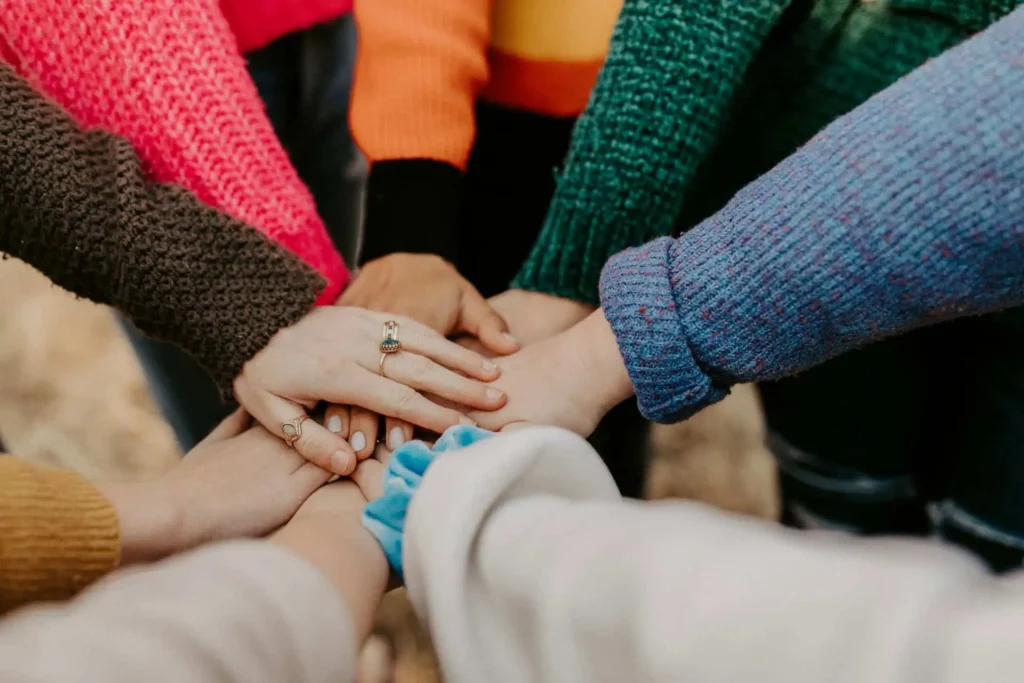
Sobriety may begin with a personal decision, but it’s sustained through relationships. Positive peer influence provides the accountability, modeling, belonging, and hope that willpower alone can’t supply. Whether you find it in a church basement meeting, a sober living home, an online forum, or a Saturday-morning sober hiking group, peer support in addiction recovery transforms sobriety from a lonely battle into a shared journey.
If you’re early in recovery, your only task today is simple: show up somewhere sober people gather, and let yourself be known. The network builds itself one honest conversation at a time.
If you or someone you love is struggling with substance use, reaching out to a treatment provider, a local recovery community organization, or a national helpline is a strong first step. You don’t have to do this alone.