Family-based interventions are one of the most effective ways to prevent and reduce youth substance use. These programs focus on strengthening family relationships, improving communication, and teaching parenting skills to create a supportive home environment. Research shows impressive results, including:
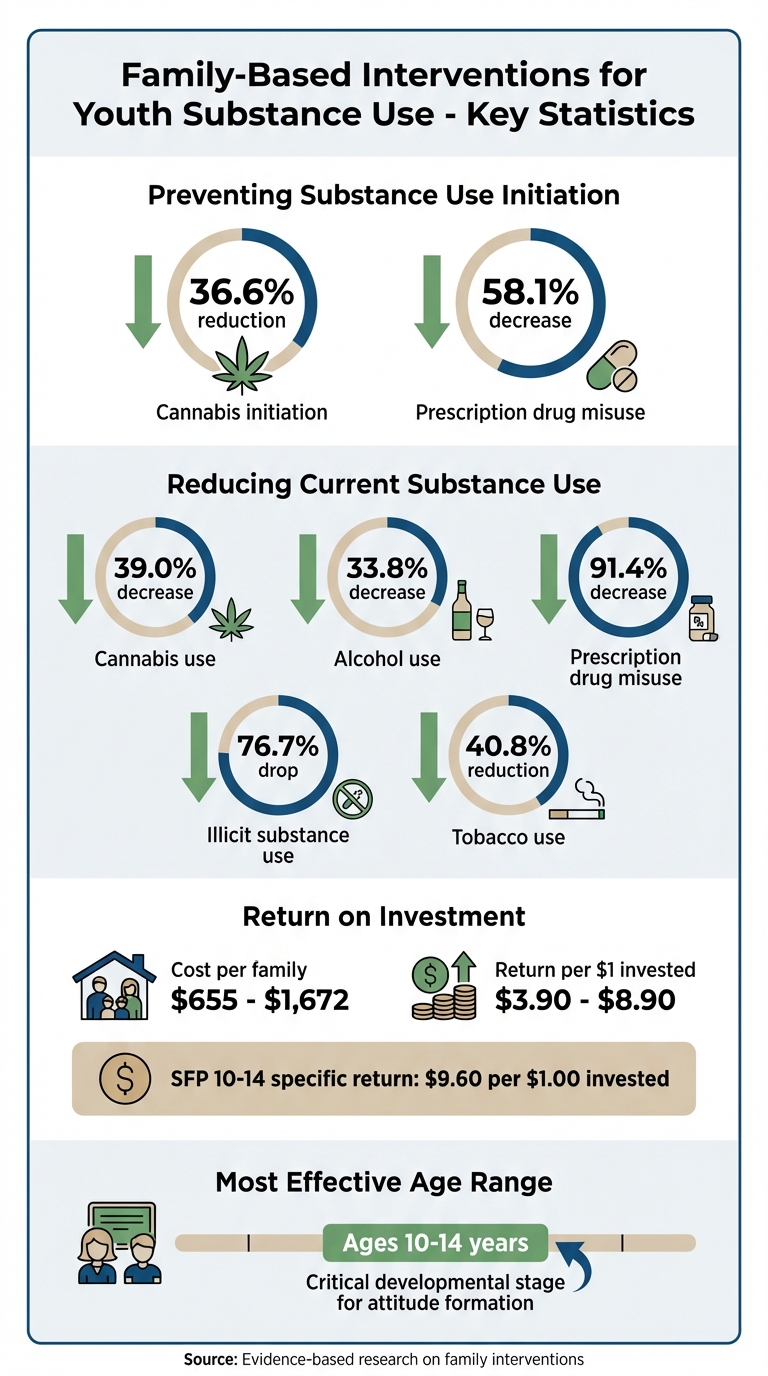
- 36.6% reduction in cannabis initiation and 58.1% decrease in prescription drug misuse.
- For youth already using substances, cannabis use dropped by 39.0%, alcohol by 33.8%, and prescription drug misuse by 91.4%.
Key strategies include parent-child bonding, effective monitoring, and clear rule-setting. Programs like the Strengthening Families Program (SFP 10-14) and Familias Unidas have shown measurable success, with economic benefits ranging from $3.90 to $8.90 for every dollar spent. These interventions not only reduce substance use but also improve mental health, academic performance, and family dynamics. Whether you’re preventing substance use or addressing existing issues, these approaches offer practical tools for a healthier family life.
Family-Based Interventions for Youth Substance Use: Key Statistics and Outcomes
It Takes a Family: The Impact of Family Participation in Teen Substance Use Treatment
sbb-itb-17645e5
How Family-Based Interventions Prevent Substance Use
Family-based interventions address substance use by focusing on everyday family interactions that influence young people’s attitudes toward drugs and alcohol. These interventions are built around three key elements: parent–child attachment, effective monitoring and discipline, and clear communication. When these elements are strong, they create a protective barrier against peer pressure and other external risks. Research shows that supportive parenting can even counteract genetic tendencies toward substance abuse. Here’s a closer look at how family dynamics and parenting skills play a crucial role in preventing youth substance use.
The Role of Family Dynamics
Family dynamics have a significant impact on whether young people are vulnerable to substance use. Factors like a chaotic home environment, weak parental bonding, inconsistent discipline, and family members modeling substance use all increase the risk. On the flip side, simple rituals – like having regular family meals – can serve as powerful protective measures. When children feel emotionally connected to their parents, they are better prepared to resist negative peer influences and make healthier decisions.
This connection is especially critical during ages 10–14, a developmental stage when attitudes about substance use are being shaped. Trust and open communication built during this time help teens navigate challenges later in life. However, families undergoing cultural transitions, such as immigrant or rural households, face unique challenges. Differences in how generations adapt to new cultural norms, often called "differential generational acculturation", can lead to conflict and weaker family bonds, increasing the risk of substance use. Strong family relationships lay the groundwork for teaching the practical skills that further protect against these risks.
Teaching Parental Skills
Beyond fostering healthy family dynamics, teaching parents specific skills strengthens these protective factors even further. Family-based interventions provide parents with tools to create a safe and supportive environment. These programs emphasize active monitoring of children’s activities and peer groups, consistent rule-setting, and effective conflict resolution. Parents are encouraged to strike a balance between setting firm boundaries and maintaining warmth, a combination shown to be highly effective.
A standout example is the Strengthening Families Program (SFP), developed by Dr. K.L. Kumpfer at the University of Utah. Between 2010 and 2014, culturally tailored versions of this program were introduced to African American, Hispanic, American Indian, Asian, and Pacific Islander families. These adaptations led to a 40% improvement in family recruitment and retention compared to earlier, generic versions. The program’s success has been validated through multiple randomized control trials worldwide, making it one of the most widely implemented family skills training programs.
The skills taught in these programs help children develop self-regulation and social competence, which are essential for resisting peer pressure and making positive choices. When parents consistently monitor their children and enforce clear rules, they reduce opportunities for substance use while fostering trust and open communication. Together, these strategies empower families to create a strong defense against substance use.
Key Components of Successful Programs
Core Skills and Strategies
Successful programs focus on developing specific skills for both parents and youth, using a mix of separate sessions and shared activities. In parent sessions, participants learn essential skills like nurturing behaviors, setting age-appropriate expectations, consistent monitoring, and balanced discipline approaches. For youth, the focus shifts to practical skills, such as goal setting, managing stress, and techniques for refusing negative influences. Communication training plays a key role, helping parents clarify rules and consequences while also fostering stronger emotional bonds. Joint family activities provide a space to practice conflict resolution, encouraging teamwork and positive interactions. These strategies are brought to life in several well-established programs, as highlighted below.
Proven Program Examples
The Strengthening Families Program (SFP 10-14) is a standout example of an effective family-based intervention. A six-year study conducted in 33 rural schools found that youth participating in SFP 10-14 delayed the onset of alcohol use by 13 months compared to their peers in control groups. The program structure includes six weekly two-hour sessions, with the first hour split into separate parent and youth groups and the second hour dedicated to joint family activities. Beyond its behavioral impact, the program demonstrates a strong economic benefit, delivering a return of $9.60 for every $1.00 invested.
Another impactful program is Familias Unidas, which was created specifically for Hispanic adolescents aged 12–16. This intervention combines parent support groups with individual family home visits. In a 2012 randomized controlled trial led by Guillermo Prado at the University of Miami, involving 232 high-risk adolescents, participants experienced significant reductions in substance use. The results included an effect size of 0.35 at three months and 0.41 at nine months, along with a notable reduction in alcohol dependence (effect size 0.89) at nine months. The program spans 12 weeks and includes eight group sessions and four home visits.
Both programs also highlight the importance of tailoring interventions to fit cultural contexts. For instance, SFP 10-14 has been adapted for African American families through the "Harambee" version, which incorporates culturally relevant materials and community-based facilitators to enhance engagement.
Implementation Tips for Families
Tailoring Interventions to Your Family
Making family-based interventions part of your routine doesn’t require sweeping changes. The key lies in focusing on three main practices: improving communication between parents and children, setting clear rules about substance use, and keeping a close eye on your child’s activities and social circle. These strategies are especially effective for families with kids aged 10–14 years, as research indicates this age group benefits the most from early prevention efforts. Small, consistent adjustments in these areas can make a big difference in reducing youth substance use.
You can customize these strategies to fit your family’s unique situation. Options include one-on-one sessions, small group activities, online modules, or workbooks that you can complete at your convenience. For families with specific cultural needs, there are tailored resources available. For instance, American Indian families can access specialized programs through the Tribal Training and Technical Assistance Center, while military families can find programs suited to their lifestyle through the Clearinghouse Continuum of Evidence.
"When parents and extended family members cannot spend much time parenting their children, they have to get more efficient with the little parenting time they have available if they want their children to grow up to be healthy and productive adults." – K. L. Kumpfer, Department of Health Promotion and Education, University of Utah
Commit to practicing new communication techniques regularly. Stick to the monitoring and discipline strategies you’ve put in place, even when life gets hectic. These home-based efforts can be further strengthened by tapping into external programs designed to support families.
Using Community Resources
Community programs can be a great addition to your home efforts, offering structured support and expert guidance. Trusted registries like the Blueprints for Healthy Youth Development and the Office of Juvenile Justice and Delinquency Prevention (OJJDP) Model Programs Guide list evidence-based interventions that have been scientifically validated. Additionally, the Prevention Technology Transfer Center (PTTC) Network provides ongoing support for implementing these strategies.
Some programs go the extra mile by offering practical services like group meals, babysitting, or regular phone check-ins, which can help families stay engaged and complete the program. The cost of family-based interventions typically falls between $655 and $1,672 per family, with a benefit-to-cost ratio ranging from 3.9 to 8.9. In other words, the economic benefits far outweigh the expenses.
For additional educational tools, Sober Living Centers (https://soberlivingcenters.com) provide resources on substance abuse prevention and treatment options. Family peer recovery support groups can also be invaluable, offering emotional support and practical advice from others who’ve been through similar experiences. These connections can provide both guidance and encouragement as families navigate the challenges of recovery.
Benefits and Long-Term Outcomes
Short-Term and Long-Term Benefits
Family-based interventions bring about both immediate and lasting improvements, especially in preventing substance misuse among youth. Research highlights some striking outcomes: a 91.4% reduction in prescription drug misuse, a 76.7% drop in illicit substance use, and significant declines in tobacco use (40.8%), cannabis use (39.0%), and alcohol use (33.8%). These numbers reflect the powerful role such programs play in addressing youth addiction.
Beyond substance use, these programs also improve mental health and academic performance. Participants experience fewer instances of delinquency and risky sexual behaviors. For example, a controlled trial of Multidimensional Family Therapy (MDFT), led by Howard A. Liddle at the University of Miami in January 2009, tracked 83 low-income, ethnically diverse adolescents (average age 13.73) over 12 months. Results revealed sustained reductions in substance use (d = 0.77), delinquent behavior (d = 0.31), and internal distress (d = 0.54).
"The family carries the most profound and long-lasting influence on child and adolescent development."
- Ken C. Winters, Ph.D., University of Minnesota Medical School
The financial impact is just as compelling. Family-based interventions provide a return of $3.90 to $8.90 for every dollar invested, thanks to reduced healthcare costs, lower expenses in the criminal justice system, and increased community productivity. The Community Preventive Services Task Force emphasizes that "economic benefits exceed the cost of family-based interventions to prevent substance use among youth". However, achieving these outcomes requires addressing several persistent challenges.
Challenges and How to Overcome Them
While the benefits are clear, maintaining long-term success can be difficult. Relapse rates range between 33% and 50% within a year, highlighting the importance of continued support. Recruiting and retaining male caregivers, like fathers, remains a hurdle. Families also face logistical issues, such as scheduling conflicts and limited access to childcare.
Practical solutions can make a big difference. Programs that provide group meals, childcare services, and consistent follow-up through phone calls often see better participation rates. Tailoring recruitment efforts and intervention materials to match each family’s specific cultural and situational needs can also reduce resistance. Establishing a strong therapeutic bond early on is another key factor in achieving better outcomes. Finally, planning for aftercare before the formal program ends helps families maintain their progress and lowers the risk of relapse.
"Parents’ involvement in their adolescent’s treatment and recovery increases the likelihood of a successful treatment experience."
- Ken C. Winters, Ph.D., University of Minnesota Medical School
Conclusion
Family-based interventions stand out as the most effective approach for preventing youth substance use. Studies consistently show that when families strengthen their relationships through better communication, clear boundaries, and nurturing connections, youth substance use declines significantly.
These programs also offer impressive financial benefits. On average, for every dollar spent, families see a return of $3.90 to $8.90, with program costs typically ranging from $655 to $1,672 per family. Beyond financial returns, these interventions also improve mental health and academic performance, making them a worthwhile investment.
If you’re ready to take action, explore evidence-based resources like Blueprints for Healthy Youth Development or SAMHSA‘s National Youth Substance Use Prevention Campaign to find programs tailored to your family’s needs. The key lies in focusing on protective factors such as fostering parent-child attachment, maintaining consistent monitoring, and encouraging open communication. These strategies are particularly effective for families with children aged 10–14 years.
Support is widely available through schools, faith-based organizations, health centers, and community-specific services. For additional educational materials on prevention and treatment, Sober Living Centers offers a wealth of resources to guide your efforts. By tapping into these tools and supports, families can sustain the progress achieved through intervention.
"Family interventions have been shown to be the most effective prevention and treatment interventions for adolescent substance abuse and other negative developmental outcomes."
- K. L. Kumpfer, Ph.D., University of Utah
Strengthening your family bonds creates a resilient foundation, paving the way for lasting prevention of substance use challenges.
FAQs
How do I know if my child needs a family-based program?
If you’re wondering whether a family-based program might help your child, watch for certain signs. These could include experimenting with alcohol, tobacco, or other drugs, noticeable shifts in mental health, academic struggles, or changes in behavior. Programs like these, often designed for kids aged 10–14, aim to strengthen family communication and provide support. If you’re dealing with substance use or related issues, reaching out to a healthcare professional or family therapist is a smart step.
What can we do at home to prevent substance use right now?
To reduce the chances of youth substance use, it’s important to build a supportive and communicative home environment. Here are some key ways to make a positive impact:
- Have honest conversations: Talk openly about the dangers and consequences of alcohol, tobacco, and drug use. Make sure your child feels safe asking questions or sharing concerns.
- Set clear expectations: Establish specific rules about substance use, and be consistent in enforcing them. This creates boundaries and helps your child understand where you stand.
- Stay involved: Keep an eye on your child’s activities and get to know their friends. Being engaged in their daily life can help you spot potential warning signs early.
Additionally, consider participating in family-based programs designed to teach prevention skills. These programs can strengthen family bonds and provide tools to navigate challenges together.
How can I find an evidence-based family program near me?
To locate a family program backed by evidence, check out resources such as The Community Guide or SAMHSA. These platforms provide recommendations for family-focused interventions and counseling options. Programs often cover areas like parent training, improving communication skills, and effective monitoring techniques, which can be applied in homes, schools, or community settings. You can also reach out to local health providers or treatment centers that specialize in family therapy. Additionally, Sober Living Centers can offer valuable guidance and resources tailored to your needs.