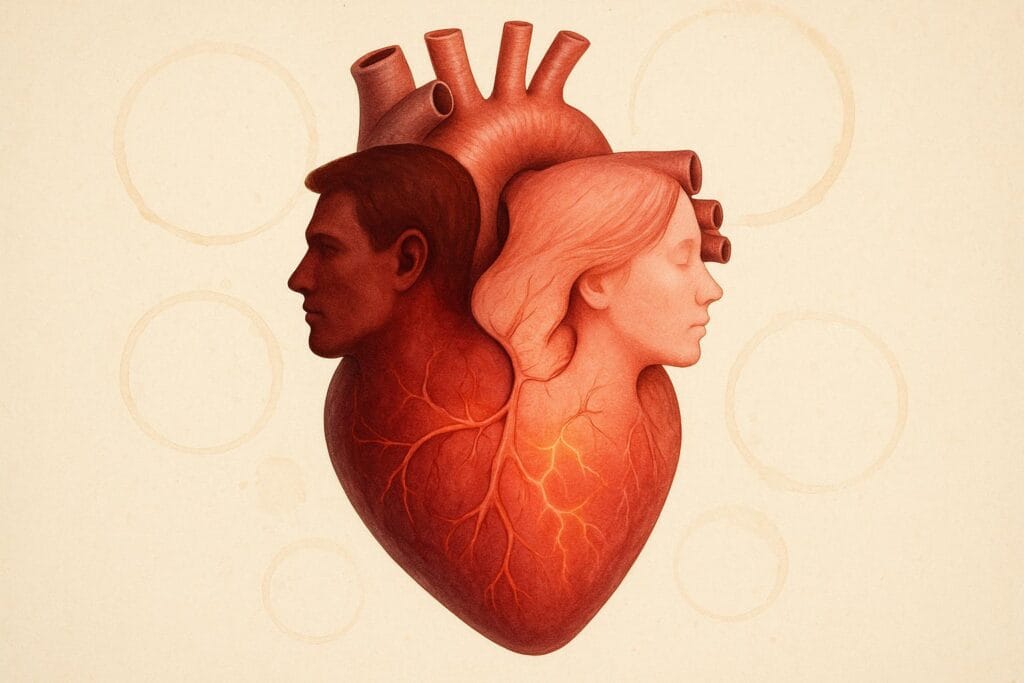
Chronic alcohol use impacts men’s and women’s heart health differently. Women face greater risks even with lower alcohol consumption over shorter periods. Biological differences, like slower alcohol metabolism and lower body water, make women more vulnerable to conditions like alcoholic cardiomyopathy, high blood pressure, and heart failure. Men, while less sensitive to smaller doses, experience a steady increase in risks as alcohol intake rises.
Key Takeaways:
- Women: Higher risk of heart muscle damage, anemia, and thyroid disorders. Moderate drinking (1–2 drinks/day) may lower blood pressure, but heavy drinking sharply increases risks.
- Men: Risk of hypertension rises steadily with alcohol intake. Higher cholesterol levels are more common.
Quick Facts:
- Women develop heart damage at ~40% less lifetime alcohol exposure than men (14.2 vs. 23.1 g/kg).
- Heavy drinking (5+ drinks on 5+ days/month) significantly increases heart failure risks for both sexes.
- Prevention, early screening, and tailored recovery plans are critical, especially for women.
Understanding these differences helps in making informed choices about alcohol consumption and heart health.
Alcohol and a Women’s Heart
How Alcohol Affects Men’s and Women’s Hearts Differently
This section delves into how alcohol impacts the heart and blood vessels differently in men and women. By examining the biological mechanisms behind alcohol’s effects, we can understand why women are at greater risk of heart damage, even when consuming less alcohol. These disparities stem from differences in how alcohol is metabolized and how it affects heart tissue.
How Alcohol Damages the Heart and Blood Vessels
Long-term alcohol consumption takes a toll on the cardiovascular system in both men and women. Alcohol directly damages heart muscle cells, leading to inflammation and weakening the heart’s ability to function properly. This damage can eventually result in alcoholic cardiomyopathy – a condition where the heart becomes enlarged and less effective at pumping blood.
Alcohol also raises blood pressure by affecting the nervous system and causing blood vessels to tighten. This added pressure can strain the heart, increasing the risk of heart failure and leading to irregular heart rhythms that disrupt normal electrical activity. These harmful effects set the stage for understanding how men and women metabolize alcohol differently and how that impacts their heart health.
Why Men and Women Process Alcohol Differently
Biological differences play a key role in how men and women metabolize alcohol, leading to varying cardiovascular risks. Women tend to metabolize alcohol more slowly due to lower levels of alcohol dehydrogenase (an enzyme that breaks down alcohol), less body water, and higher body fat. These factors extend the time alcohol remains in a woman’s system, prolonging its toxic effects on the heart. Additionally, hormonal factors like estrogen can increase alcohol absorption and retention, further heightening the risk of heart damage.
Because of these differences, women are more vulnerable to heart-related issues even at lower levels of alcohol consumption. This slower metabolic rate means alcohol’s harmful effects can accumulate more quickly, leading to severe conditions over time.
What These Differences Mean for Heart Health
The metabolic differences between men and women result in significantly different outcomes for cardiovascular health. For instance, women with alcohol dependence develop alcoholic cardiomyopathy after consuming a lifetime ethanol dose of just 14.2 ± 5.4 g/kg, compared to 23.1 ± 12.4 g/kg for men. Women with this condition are also more likely to experience additional health complications, such as anemia (28.3% in women versus 19.2% in men), thyroid disorders (10.5% versus 4.7%), and asthma (5.1% versus 2.5%).
Blood pressure responses to alcohol also vary between the sexes. In men, the risk of hypertension tends to rise steadily with increased alcohol consumption. In contrast, women may experience a J-shaped curve: moderate drinking (1–2 drinks per day) is linked to a lower risk of hypertension, but higher levels of alcohol intake sharply increase cardiovascular problems. These findings highlight that women are at greater risk for heart muscle damage from alcohol, even over shorter periods and with lower levels of consumption.
Heart Conditions Caused by Chronic Alcohol Use: Men vs Women
Chronic alcohol use can lead to serious heart problems, and the effects often differ between men and women. Understanding these differences is crucial for creating effective prevention strategies.
High Blood Pressure
Alcohol affects blood pressure differently in men and women. For men, the relationship is straightforward: the more they drink, the higher their risk of hypertension, without any apparent benefit from light drinking. Women, however, show a different pattern. Studies suggest that consuming one to two drinks daily might lower their risk of hypertension, but this potential benefit disappears with heavier drinking. These blood pressure changes can pave the way for structural heart issues, such as cardiomyopathy.
Alcoholic Cardiomyopathy
Alcoholic cardiomyopathy, a condition where the heart muscle becomes enlarged and weakened, is another serious consequence of chronic drinking. Women are more vulnerable to this condition, developing it after consuming about 40% less alcohol over time compared to men. While both men and women experience similar structural changes – like a dilated left ventricle, increased heart mass, and reduced ejection fraction – women often face more secondary complications. Women report higher rates of depression and anxiety linked to this condition, whereas men are more likely to have elevated cholesterol levels. Beyond structural damage, chronic alcohol use disrupts the heart’s rhythm, further impairing its function.
Heart Failure and Irregular Heart Rhythms
Chronic alcohol use also raises the risk of heart failure and arrhythmias (irregular heart rhythms) in both sexes, but women appear more vulnerable even at lower levels of alcohol consumption. Women tend to develop alcohol-related heart muscle damage with less exposure and over a shorter timeframe than men. Interestingly, women with alcohol-induced heart failure are more likely to have preserved ejection fraction, meaning their hearts retain pumping strength but become stiffer, making it harder for the heart to fill properly. These rhythm disturbances can interfere with the heart’s electrical system and, if not addressed, may lead to sudden cardiac events.
Prevention and early intervention are key. Resources like those offered by Sober Living Centers can help individuals understand these risks, seek appropriate screenings, and explore recovery options.
sbb-itb-17645e5
Comparison Table: Heart Effects in Men vs Women
Key Differences in Heart Impact
Chronic alcohol use takes a different toll on the heart depending on gender. Women are more vulnerable, developing serious conditions like alcoholic cardiomyopathy at much lower lifetime alcohol doses – 14.2 ± 5.4 g/kg compared to 23.1 ± 12.4 g/kg for men.
Women with alcohol-related heart disease are more likely to experience anemia (28.3% vs. 19.2% in men), thyroid disorders (10.5% vs. 4.7%), and asthma (5.1% vs. 2.5%). Emotional impacts also differ: women report higher rates of depression and anxiety tied to their heart conditions, while men more often deal with elevated cholesterol levels.
Interestingly, women show a “J-shaped” pattern when it comes to alcohol and hypertension. Having 1–2 standard drinks a day may lower their risk of high blood pressure, but anything beyond that increases it. Men, on the other hand, display a more straightforward relationship – more alcohol consistently leads to higher blood pressure risks.
Using U.S. Measurement Standards
To put these differences into perspective, here’s how alcohol consumption is quantified in the U.S.: one standard drink contains 14 grams of pure alcohol. That’s roughly equal to 5 ounces of wine, 12 ounces of beer, or 1.5 ounces of spirits.
| Heart Effect | Women | Men |
|---|---|---|
| Alcoholic Cardiomyopathy Threshold | 14.2 ± 5.4 g/kg lifetime alcohol dose | 23.1 ± 12.4 g/kg lifetime alcohol dose |
| Weekly Risk Threshold | Increases with consumption above 7 drinks/week | Increases with consumption above 10 drinks/week |
| Hypertension Pattern | J-shaped (1–2 drinks/day may lower risk; risk rises with higher consumption) | Linear (increasing consumption is associated with higher risk) |
| Anemia Rate | 28.3% in those with alcoholic cardiomyopathy | 19.2% in those with alcoholic cardiomyopathy |
| Thyroid Disorders | 10.5% in patients with heart conditions | 4.7% in patients with heart conditions |
| Depression/Anxiety | Higher prevalence among those with heart disease | Lower prevalence compared to women |
| High Cholesterol | Lower rates observed | Approximately 19.5% in those with alcoholic cardiomyopathy |
| Cardiomyopathy Prevalence | Lower occurrence | Higher occurrence |
| Heart Failure Type | More likely to present with preserved ejection fraction | More likely to exhibit reduced ejection fraction |
Drinking more than 7–10 drinks per week (98–140 grams of alcohol) significantly increases heart failure risks, with women hitting the danger zone at the lower end of this range. For women who drink heavily – defined as 5 or more drinks on one occasion, at least 5 days a month – the risks of cardiovascular damage rise sharply.
These U.S.-based guidelines highlight the tipping point where alcohol consumption moves from potentially protective (1–2 drinks per day) to harmful. They serve as a practical tool for healthcare professionals and individuals aiming to manage alcohol intake and safeguard heart health through prevention and early intervention.
Prevention, Screening, and Recovery Approaches
Prevention and Education
Prevention strategies should take into account the heightened cardiovascular risks women face from lower levels of alcohol consumption. Public health campaigns must emphasize that women can experience severe heart muscle damage from consuming significantly less alcohol over shorter periods compared to men.
Effective prevention programs should craft messages that resonate with both men and women. For women, this means highlighting that the commonly accepted “safe” drinking guidelines may not equally apply when considering heart health.
Community-based education initiatives have shown success in curbing high-risk drinking. These programs should use gender-specific messaging and familiar U.S. guidelines to clearly outline the associated risks. Addressing social norms that influence drinking behaviors is equally important. Providing clear, science-backed information about how chronic alcohol use uniquely affects the cardiovascular system in men and women is critical for prevention efforts.
Screening and Early Detection
After prevention, early detection becomes the next priority. Implementing sex-specific screening protocols is crucial to identifying heart issues early. Women, in particular, should be screened at lower thresholds due to their increased susceptibility to heart muscle damage.
Healthcare providers should routinely conduct cardiovascular assessments, including blood pressure checks, echocardiograms, and evaluations for irregular heart rhythms. For women, these screenings are essential even if their alcohol consumption history is moderate.
Mental health evaluations should also be part of the screening process, as women with alcohol-related heart disease often experience higher rates of depression and anxiety. Research indicates that women develop alcoholic cardiomyopathy after a lifetime alcohol dose of 14.2 ± 5.4 g/kg, compared to 23.1 ± 12.4 g/kg for men. This stark difference supports the need for gender-specific screening schedules and intensity levels, ensuring early intervention and a smoother path to recovery.
Recovery Resources and Support
Comprehensive educational resources and support systems are vital for recovery from alcohol-related heart disease. Organizations like Sober Living Centers provide valuable information about alcohol abuse and assist in locating rehabilitation facilities.
Recovery pathways should address gender-specific challenges. For women, programs should integrate mental health support to manage the higher rates of depression and anxiety often linked to alcohol-related heart conditions. These programs should also screen for and treat co-occurring conditions such as anemia and thyroid disorders, which disproportionately affect women with alcoholic cardiomyopathy.
For men, recovery efforts may focus more on lifestyle changes, such as improving diet and managing cholesterol. Both men and women benefit from peer support networks and access to educational materials.
Support services are especially crucial for women, who may face unique barriers like social stigma or caregiving responsibilities that hinder their ability to seek help. Sober Living Centers not only offer educational resources but also guide individuals through the healthcare system and connect them with treatment facilities that address gender-specific needs.
Family involvement plays a key role in recovery, as lifestyle changes often impact the entire household. Educational resources can help family members understand the specific cardiovascular risks for men and women and provide the tools needed to support their loved ones effectively.
Conclusion: Key Points About Sex-Specific Heart Effects
Main Findings Summary
Chronic alcohol use impacts men’s and women’s hearts in distinct ways. Women are more susceptible to developing alcoholic cardiomyopathy, with an average lifetime alcohol exposure of 14.2 ± 5.4 g/kg, compared to 23.1 ± 12.4 g/kg for men. This increased vulnerability stems from biological differences in alcohol metabolism, which means women can suffer severe heart muscle damage from lower amounts of alcohol over shorter timeframes.
While men show a higher overall prevalence of alcoholic cardiomyopathy, women who develop the condition often face additional health challenges. These include higher rates of anemia, thyroid disorders, depression, and anxiety. Men, on the other hand, are more likely to experience issues like high cholesterol. Women also display a unique J-shaped blood pressure response to alcohol: moderate consumption may initially lower hypertension risk, but excessive drinking causes blood pressure to spike more sharply than in men.
These differences highlight the importance of developing tailored research and clinical approaches to address these sex-specific risks.
Next Steps and Future Research
Despite previous prevention and screening recommendations, critical gaps remain in understanding how alcohol uniquely affects women’s hearts. Large-scale, sex-specific studies are urgently needed to determine safe alcohol consumption thresholds for women. Historically, women have been underrepresented in alcoholic cardiomyopathy research, leaving healthcare providers with limited information about when alcohol-induced heart problems begin to emerge.
Healthcare systems need to adapt by introducing gender-specific screening protocols. For women, this means screening for heart disease at lower levels of alcohol consumption and shorter drinking histories than current practices suggest. Clinical guidelines must also evolve to address these unique risks and the co-occurring conditions that disproportionately affect women.
Public health policies should move away from generic messaging and emphasize the heightened cardiovascular risks women face. Prevention campaigns and educational initiatives need to provide gender-sensitive information that reflects these differences. Organizations like Sober Living Centers can play a key role by offering resources tailored to women and connecting them with appropriate treatment options.
Future research should prioritize uncovering the mechanisms driving these sex differences and focus on developing targeted interventions. Collaboration among researchers, healthcare providers, and recovery organizations will be essential to closing these knowledge gaps and ensuring both men and women receive effective, evidence-based care for alcohol-related heart disease.
FAQs
Why are women more vulnerable to alcohol-related heart damage than men, even when drinking less?
Women tend to be more vulnerable to alcohol-related heart damage, largely due to differences in body composition and the way alcohol is processed in their bodies. On average, women have a higher percentage of body fat and less water in their bodies compared to men. Since alcohol disperses in water, this lower water content means alcohol becomes more concentrated in a woman’s bloodstream, putting extra strain on the heart even at lower levels of drinking.
Hormonal differences also play a role, potentially intensifying alcohol’s impact on the cardiovascular system. Over time, regular alcohol use in women has been associated with a higher risk of serious conditions like cardiomyopathy, high blood pressure, and other heart problems. Being aware of these risks can encourage healthier decisions and motivate seeking help when necessary.
How do biological differences between men and women impact how alcohol affects their heart health?
Men and women process alcohol differently due to differences in body composition, hormones, and enzyme activity. Women typically have a higher percentage of body fat and less water in their bodies compared to men. This means alcohol becomes more concentrated in a woman’s bloodstream. On top of that, women produce lower levels of alcohol dehydrogenase – an enzyme that breaks down alcohol in the stomach – resulting in higher blood alcohol levels even when consuming the same amount as men.
These biological differences can heighten the cardiovascular risks linked to long-term alcohol use for women, such as elevated blood pressure and an increased chance of alcohol-related heart conditions. Men face these risks too, but the effects may vary due to their unique physiology. Recognizing these distinctions is key to developing effective prevention and treatment approaches for alcohol-related heart health issues.
What steps can women take to protect their heart health if they choose to drink alcohol, considering the risks discussed in the article?
To reduce the impact of alcohol on heart health, women can take a few key steps. Start by keeping alcohol consumption within moderate limits – for women, that means no more than one drink per day, according to health guidelines. Pair this with a heart-friendly lifestyle that includes a balanced diet, regular exercise, effective stress management, and avoiding smoking. Regular check-ups with a healthcare provider are also essential for monitoring cardiovascular health and addressing any concerns about alcohol use.
For additional support with managing alcohol intake or improving overall well-being, resources like Sober Living Centers offer helpful information on prevention, treatment, and recovery options.