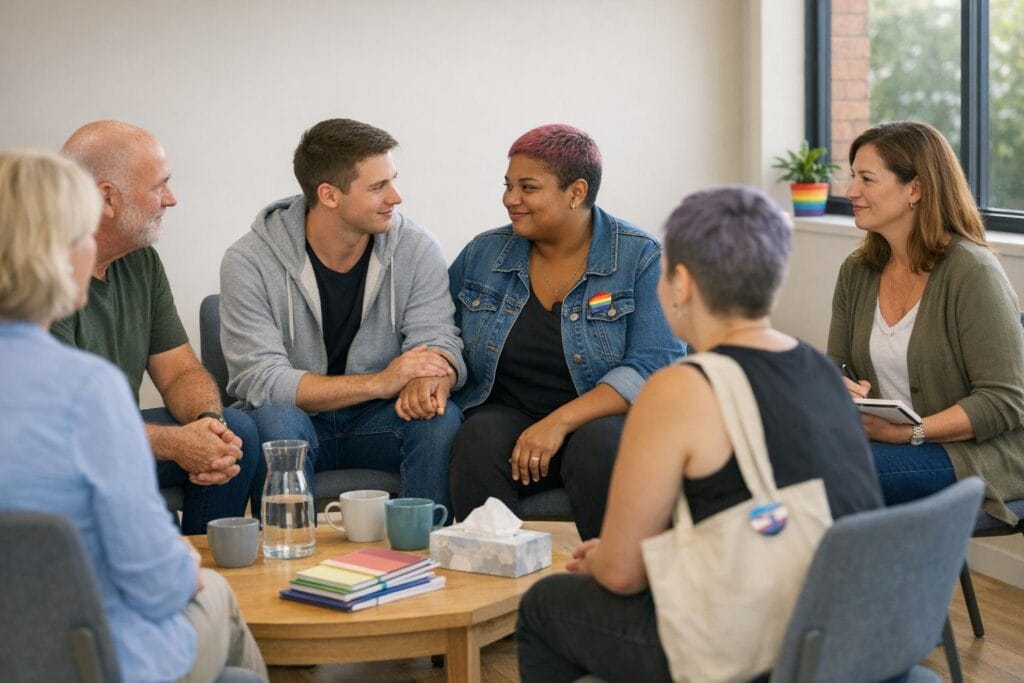
LGBTQ+ addiction support groups provide a safe space tailored to the unique challenges faced by this community, including discrimination, family rejection, and minority stress. With higher rates of substance use – 20-30% compared to 9% in the general population – these groups address specific issues like chemsex, trauma, and mental health struggles. Despite this need, only 7% of U.S. treatment programs offer LGBTQ+-specific care.
Key Points:
- Why They Matter: Address minority stress, stigma, and unique triggers like reliance on bars or chemsex.
- Challenges: Discrimination, lack of LGBTQ+-competent providers, and financial barriers hinder access to care.
- Types of Groups: Options include LGBTQ+-focused 12-step programs (e.g., GAL-AA), secular groups like SMART Recovery, and LGBTQ+-only treatment centers (e.g., Pride Institute).
- Finding Support: Use virtual meetings (e.g., Gay & Sober), local LGBTQ+ centers, or directories like NALGAP to locate affirming resources.
These groups create a judgment-free environment where LGBTQ+ individuals can recover alongside others who share similar experiences. Whether in-person or online, finding the right support is a critical step toward healing.
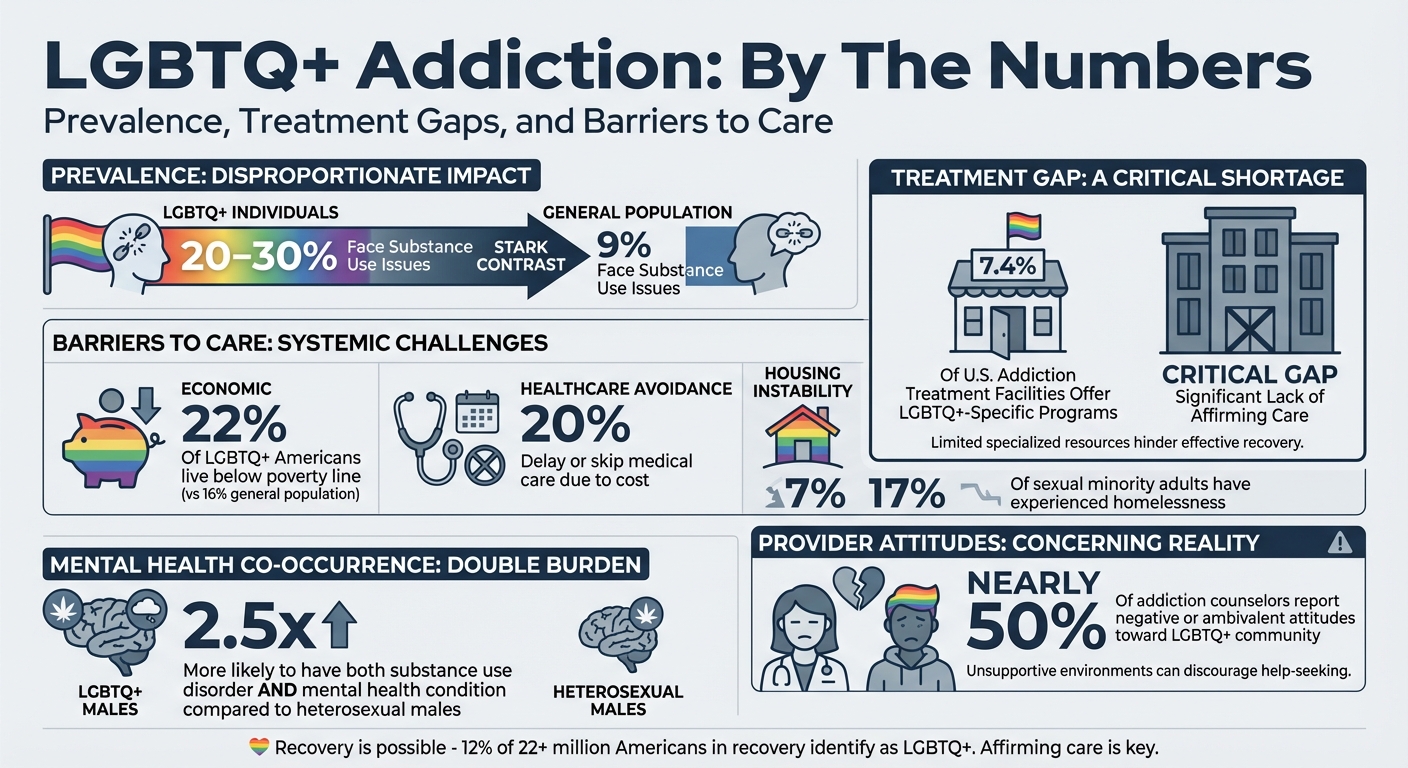
LGBTQ+ Addiction Statistics and Barriers to Treatment
Challenges Facing LGBTQ+ Individuals in Addiction Recovery
Discrimination and Stigma
Discrimination plays a significant role in pushing many LGBTQ+ individuals toward substance use. The chronic stress caused by stigmatization and prejudice often leads to heightened mental health challenges like depression, which, in turn, can fuel substance use issues. Internalizing societal biases only deepens these struggles, creating a cycle that’s hard to break.
Fear of judgment is another major barrier. Concerns about being misgendered, harassed, or dismissed by healthcare providers prevent people from seeking the help they need. In residential treatment settings, transgender individuals are particularly vulnerable to harassment and even violence from other patients, leading many to leave programs prematurely. Alarmingly, nearly half of addiction counselors report holding negative or ambivalent attitudes toward the LGBTQ+ community, which can severely impact the effectiveness of treatment. These external pressures often compound personal trauma, making recovery even more challenging.
Mental Health Issues and Trauma
Mental health and addiction are tightly linked within the LGBTQ+ community. For example, LGBTQ+ males are more than twice as likely to experience both a substance use disorder and a mental health condition compared to heterosexual males. Many turn to substances as a way to cope with trauma from hate crimes, family rejection, or the constant stress of concealing their identity. Unfortunately, traditional treatment programs often fail to address these interconnected challenges, lacking the sensitivity needed to truly support LGBTQ+ individuals. Add to this the pressures of economic instability and social marginalization, and the barriers to effective, personalized care become even more daunting.
Access Barriers to Treatment and Support
Access to treatment is another critical challenge. Shockingly, only 7.4% of addiction treatment facilities in the U.S. offer programs specifically designed for LGBTQ+ individuals. Discrimination in housing, employment, and healthcare further limits access to care. For instance, 22% of LGBTQ+ Americans live below the poverty line, compared to 16% of their heterosexual and cisgender peers. Financial constraints force 20% of LGBTQ+ individuals to delay or skip necessary medical care altogether. Adding to this, 28% have faced harassment in medical settings, 2% have experienced violence, and 22% of transgender individuals have been outright denied healthcare.
Stable housing is another critical factor in recovery, yet it’s often out of reach. Seventeen percent of sexual minority adults have experienced homelessness at some point in their lives, and nearly half of LGBTQ+ young adults are estranged from at least one family member. Without a stable home or a supportive network, maintaining sobriety becomes an uphill battle.
| Barrier Type | Specific Challenge | Impact on Recovery |
|---|---|---|
| Social/Economic | Homelessness (17% lifetime rate), family rejection (50% estrangement) | Lack of a stable environment for long-term sobriety |
| Healthcare System | Only 7.4% of facilities offer specialized care; 28% face harassment in medical settings | Unique traumas remain unaddressed; delayed treatment |
| Provider Competency | Nearly 50% of counselors report negative attitudes toward the LGBTQ+ community | Poor therapeutic relationships; early program departure |
| Financial | 22% live in poverty; 20% avoid care due to cost | Inability to afford treatment and sustain recovery support |
Compassionate Care for LGBTQ+ Individuals Struggling with Substance Use Disorder
Types of LGBTQ+ Addiction Support Groups
Finding the right support group can play a big role in recovery. For LGBTQ+ individuals, several options cater specifically to their needs, each with its own approach and philosophy. Below, we’ll explore these types to help you choose a group that aligns with your recovery journey.
LGBTQ+ 12-Step Programs
Traditional 12-step programs like Alcoholics Anonymous (AA) and Narcotics Anonymous (NA) have LGBTQ+-specific meetings that create affirming and supportive spaces. Groups such as Gays and Lesbians in Alcoholics Anonymous (GAL-AA) and Gay & Sober follow the familiar 12-step structure while addressing the unique challenges faced by LGBTQ+ individuals. A key feature of these programs is the sponsor relationship, which pairs participants with mentors who have successfully worked through the 12 steps. This connection can help combat the isolation and minority stress often felt by LGBTQ+ individuals.
As one participant in The PRIDE Study shared: “I know I stayed as long as I did because back then it was the only space to meet other LGBTQ+ folks who were also clean and sober”. Gay & Sober goes a step further by offering free daily online meetings, wellness programs, and sober social events.
Non-12-Step and Secular Programs
For those who prefer a non-spiritual approach, programs like SMART Recovery offer evidence-based methods grounded in Cognitive Behavioral Therapy (CBT). These programs focus on self-management, equipping participants with practical tools to address addictive behaviors and build healthier habits.
This approach can be especially appealing to LGBTQ+ individuals who may have faced rejection from religious communities. By focusing on behavioral change and coping strategies, these programs help overcome the barriers of discrimination and minority stress.
LGBTQ+-Only Treatment Programs
Some treatment centers exclusively serve LGBTQ+ clients, offering a more tailored approach to care. Facilities like Pride Institute and Inspire Recovery provide comprehensive services, including residential care and trauma-informed therapy, designed to address the unique challenges faced by LGBTQ+ individuals. These programs go beyond being inclusive – they actively affirm diverse identities.
The National Institute on Drug Abuse (NIDA) highlights the effectiveness of such programs, stating, “Addiction treatment programs that offer specialized groups for the LGBTQ+ community show better outcomes compared to non-specialized programs”. These centers address issues like family rejection, coming-out struggles, and gender dysphoria while offering accommodations such as gender-affirming housing and staff trained in proper pronoun usage.
| Program Type | Core Approach | Examples | Best For |
|---|---|---|---|
| LGBTQ+ 12-Step | Spiritual roots; peer support | GAL-AA, Gay & Sober | Those comfortable with spiritual frameworks |
| Non-12-Step/Secular | Evidence-based methods; self-management | SMART Recovery | Individuals seeking a scientific, secular approach |
| LGBTQ+-Only Treatment | Clinical, trauma-informed care | Pride Institute, Inspire Recovery | Those requiring identity-specific, comprehensive care |
sbb-itb-17645e5
How to Find and Join LGBTQ+ Addiction Support Groups
Navigating the recovery process as an LGBTQ+ individual can come with unique challenges. Finding the right support group is an important step toward creating a safe and affirming environment that fosters healing and growth.
Online and Virtual Support Groups
Virtual meetings have become a lifeline, especially for those in remote areas or who face mobility challenges. For instance, Gay & Sober hosts free daily online meetings, and Gays and Lesbians in Alcoholics Anonymous (GAL-AA) provides a detailed directory of LGBTQ+-specific meetings. Groups like The Acid Test even offer multiple Zoom meetings each day, while Rainbow Asheville holds nightly gatherings at 8:00 PM Eastern Time – contact the host for meeting details.
Most virtual meetings are hosted on platforms like Zoom. If you’re looking for more resources, the official A.A. Meeting Guide app can help you find both online and local meetings. Be sure to double-check meeting details, such as passcodes and time zones, to avoid any hiccups. If video meetings feel overwhelming, the LGBT National Help Center (888-843-4564) offers online peer chat support.
These virtual options can serve as an excellent starting point, offering accessibility and flexibility before you explore in-person opportunities.
Local In-Person Support Groups
Your local LGBTQ+ community center is often a great place to start when searching for in-person support. Many centers host recovery meetings or maintain lists of LGBTQ+-friendly resources. You can also consult the NALGAP Member Directory to find addiction professionals who can connect you with local groups. If you’re looking for secular, evidence-based peer support, SMART Recovery provides a meeting locator to help you find sessions nearby. Additionally, non-traditional venues like community centers or LGBTQ+-friendly events may host support groups. Tools like “Everywhere is Queer” can also help identify LGBTQ+-owned or welcoming spaces for sober gatherings.
Local meetings provide a sense of connection and shared experience that can be especially meaningful in addressing the stress unique to LGBTQ+ individuals. When reaching out to potential groups, ask specific questions, such as whether they have programs tailored to LGBTQ+ members or employ LGBTQ+ clinicians. If you’re transgender, it’s worth confirming whether the group offers gender-affirming housing or has staff trained to address transgender-specific needs. Finding the right group may take some time, so consider attending a few different meetings to discover the environment where you feel most comfortable.
Using Sober Living Centers for Additional Resources
To complement your group support, consider exploring educational tools that can deepen your understanding of addiction and recovery. Sober Living Centers (https://soberlivingcenters.com) offers a wealth of information on topics like treatment options, prevention strategies, and pathways to sobriety. While support groups provide peer connection, these resources can help you better understand the broader recovery process. Combining these tools with group participation can create a well-rounded approach to overcoming addiction.
Conclusion: Starting Your Recovery Journey
Key Takeaways
LGBTQ+ addiction recovery comes with its own set of challenges, requiring support systems that truly understand these unique experiences. Statistics show that 20–30% of LGBTQ+ individuals face substance use issues, compared to just 9% of the general population. Specialized programs are crucial because they address factors like minority stress, discrimination, and trauma, which often contribute to substance use. Unfortunately, only about 7.4% to 8% of addiction treatment programs in the U.S. cater specifically to LGBTQ+ needs.
Finding a community of peers with similar experiences can make a huge difference. It helps combat the isolation and stigma that often hinder recovery. Whether you connect with a 12-step program like Gays and Lesbians in Alcoholics Anonymous (GAL-AA) or explore a secular option such as SMART Recovery, the key is to find a safe, understanding environment. Addressing co-occurring mental health issues like depression and anxiety is also critical, as LGBTQ+ individuals are 2.5 times more likely to face these challenges.
Armed with these insights, you can take the first steps toward recovery.
Taking Action Toward Recovery
Turning knowledge into action is the next step. Start by acknowledging the need for help and reaching out to resources designed for LGBTQ+ individuals. The LGBT National Help Center (888-843-4564) offers immediate support. For virtual meetings, check out organizations like Gay & Sober, or use the NALGAP Member Directory to locate LGBTQ+-affirming clinicians in your area. When contacting treatment centers, ask if they have LGBTQ+ clinicians or programs tailored to the community – it’s important to find care that genuinely understands your needs.
Sober Living Centers (https://soberlivingcenters.com) is another valuable resource, offering educational tools on treatment options, prevention methods, and recovery strategies that can complement peer support. Combining these resources with a supportive community can provide a balanced path to recovery. Remember, you’re not alone – nearly 12% of the more than 22 million people in recovery across the U.S. identify as LGBTQ+.
FAQs
What challenges do LGBTQ+ individuals face during addiction recovery?
LGBTQ+ individuals often face distinct obstacles during addiction recovery. Factors like discrimination, social isolation, and trauma contribute to a higher prevalence of substance use disorders within this community. Experiences of rejection, stigma, and homophobia can amplify stress and mental health challenges, leading some to use substances as a way to cope.
Seeking treatment presents its own set of difficulties. Fear of judgment, potential discrimination from healthcare providers, and the lack of LGBTQ+-affirming rehab programs can make it harder to access help. Recovery outcomes are much better in environments that are supportive and affirming, where specific issues like stigma, trauma, and social rejection are directly addressed. Tailored care can make a significant difference in the healing process.
Where can I find addiction support groups specifically for the LGBTQ+ community?
Finding addiction support groups specifically for the LGBTQ+ community often begins with reaching out to local LGBTQ+ centers or health clinics. These places usually have up-to-date information about nearby resources. National organizations like the Human Rights Campaign and NALGAP (National Association of Lesbian, Gay, Bisexual, Transgender Addiction Professionals and Their Allies) also offer directories and recovery options tailored to LGBTQ+ individuals.
In addition, many recovery-focused organizations and online platforms feature LGBTQ+-specific resources. A quick online search for support groups in your area can uncover helpful options. These groups aim to create a safe and affirming environment where individuals can connect and work through recovery together.
Why are LGBTQ+-specific addiction treatment programs essential?
LGBTQ+-specific addiction treatment programs play a crucial role in addressing the unique struggles faced by this community. Challenges like discrimination, social stigma, and minority stress often lead to higher rates of substance misuse among LGBTQ+ individuals. These programs create a safe and affirming space where care is specifically tailored to meet these needs.
Without inclusive treatment options, many LGBTQ+ individuals may face obstacles like providers who lack understanding of their lived experiences. Programs that prioritize culturally competent care help build trust, encourage healing, and support sustained recovery for those who need it most.