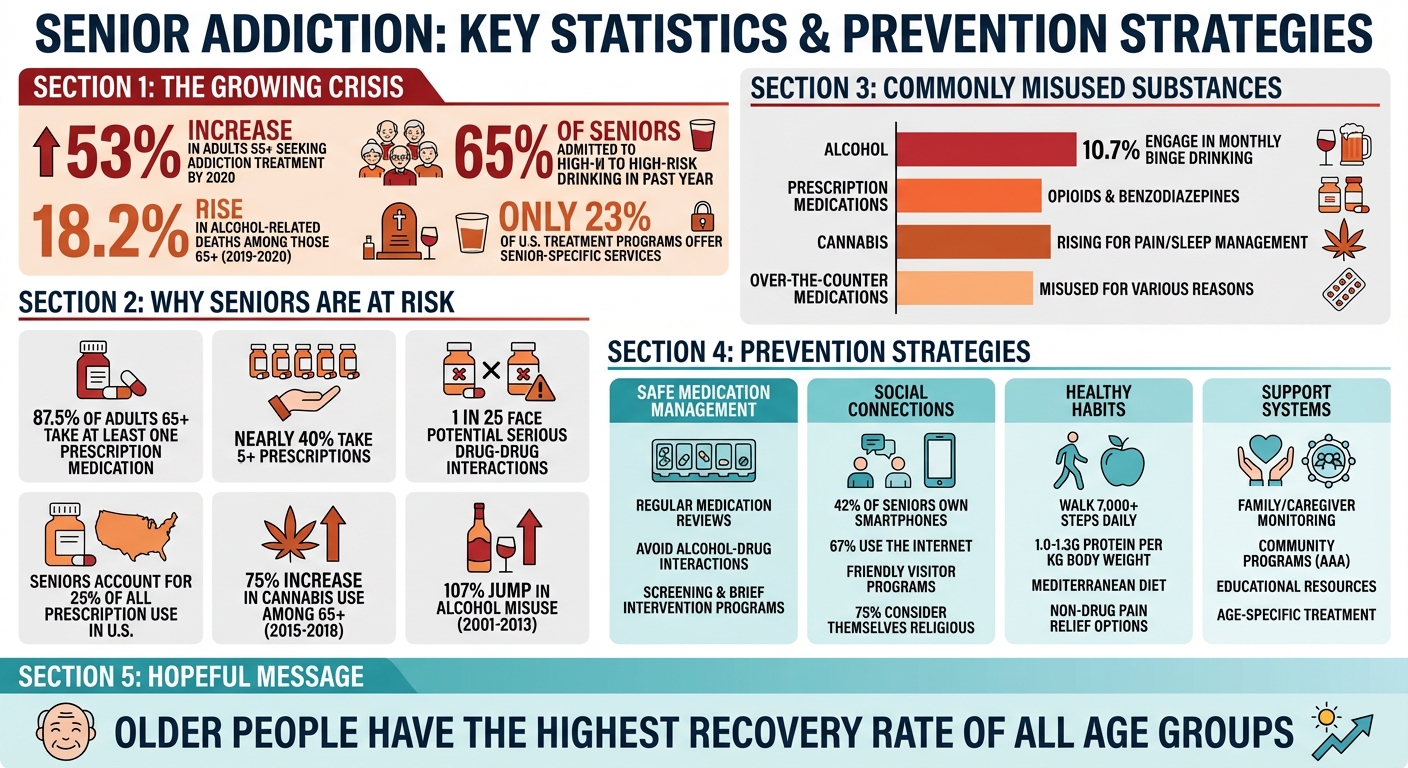
Addiction in seniors is a growing issue, often overlooked due to symptoms being mistaken for aging. By 2020, adults 55+ seeking addiction treatment rose by 53%, and alcohol-related deaths in those 65+ increased by 18.2%. Factors like slower metabolism, medication interactions, chronic pain, and social isolation contribute to the problem. Here’s how to address it:
- Safe medication practices: Regular reviews by healthcare providers and avoiding alcohol-drug interactions.
- Social connections: Encourage activities like volunteering, walking clubs, or tech-based communication to combat loneliness.
- Healthy habits: Promote exercise, balanced diets, and stress management techniques like yoga or meditation.
- Family and caregiver involvement: Look for warning signs (e.g., memory lapses, bruises, isolation) and approach conversations with care.
- Community resources: Programs like “Friendly Visitor” and tools from Sober Living Centers offer support and education.
Preventing addiction in seniors requires awareness, early intervention, and a focus on social and physical well-being.
Senior Addiction Statistics and Prevention Strategies
Understanding Addiction in Seniors
Risk Factors for Senior Addiction
Older adults face unique challenges that make them more susceptible to substance misuse. One key factor is the way aging affects the body. As metabolism slows down, even small amounts of substances can have amplified effects. Frederic C. Blow, PhD, Professor of Psychiatry at the University of Michigan, explains:
“Smaller amounts of substances have bigger effects in older individuals because of changes in absorption and metabolism. Even low levels of use – one or two drinks, for example – can have a big impact on everyday functioning.”
Chronic pain is another major contributor. Many seniors turn to opioids or over-the-counter (OTC) medications for relief. With nearly 40% of older adults taking five or more prescriptions, the risk of harmful drug interactions becomes a serious concern. In fact, approximately 87.5% of adults aged 65 and older are on at least one prescription medication.
Life transitions, such as retirement, financial difficulties, moving, or losing a loved one, also create emotional stress that can lead to substance use as a coping mechanism. Kimberly Burton, a Peer Recovery Educator, highlights this connection:
“A lot of the change in later life is thematic of loss, and we know that loss can contribute to all kinds of mental health challenges, including substance use.”
Social isolation and loneliness further compound the issue, particularly when combined with mental health conditions like depression, anxiety, or PTSD. Generational attitudes also play a role. Baby boomers (born 1946–1964) grew up during a time of more permissive views on substance use, which has contributed to higher rates of misuse compared to earlier generations. For instance, cannabis use among adults aged 65 and older increased by 75% between 2015 and 2018, while alcohol misuse saw a 107% jump between 2001 and 2013.
Recognizing these risk factors is essential to understanding why certain substances pose heightened dangers for seniors.
Substances Seniors Commonly Misuse
Alcohol is the most frequently misused substance among older adults. About 10.7% of seniors engage in binge drinking monthly. Alcohol use becomes particularly dangerous when combined with prescription medications, as it can intensify side effects and lead to harmful interactions.
Prescription medications, especially opioids and benzodiazepines, also present significant risks. While these drugs are often prescribed for pain or anxiety, they can lead to serious issues like overdose, respiratory problems, cognitive decline, and falls.
Cannabis use is on the rise among seniors, often as a way to manage conditions like chronic pain, arthritis, or sleep problems. However, cannabis use can lead to side effects such as memory issues, balance problems, and increased cardiovascular risks.
Over-the-counter (OTC) medications, including acetaminophen and certain sleep aids, are another area of concern. Many seniors mistakenly believe these drugs are entirely safe because they are available without a prescription. However, OTC medications can interact dangerously with both prescription drugs and alcohol.
Substance misuse among individuals over 65 is estimated at 4%, but in healthcare settings, up to 15% of older patients may meet the criteria for at-risk drinking. Additionally, around 1.7 million Americans aged 50 and older live with both a mental illness and a substance use disorder. These statistics highlight the urgent need for awareness and tailored interventions.
sbb-itb-17645e5
Prevention Strategies That Work
Safe Medication Management
Keeping track of medications is a critical step in preventing prescription drug misuse. Detailed records allow for early detection of potential issues. Healthcare providers should routinely review prescribed medications, especially psychoactive drugs used for pain, sleep, or anxiety, to avoid unnecessary long-term use.
Programs like Screening and Brief Intervention (SBI) have shown success in identifying early signs of misuse before they escalate. For example, between 2005 and 2010, the Center for Substance Abuse Prevention (CSAP) at SAMHSA funded a project across four sites – Broward County Elderly and Veterans Services Division (Ft. Lauderdale, FL), The Council on Alcohol and Drugs Houston (Houston, TX), Partners in Care Foundation (San Fernando, CA), and Rush University Medical Center Older Adult Programs (Chicago, IL). These sites used prescreening tools and brief intervention workbooks specifically designed for older adults, achieving positive results.
Coordinated care is another vital component, ensuring that healthcare providers communicate effectively to avoid dangerous drug interactions. Additionally, educating seniors and their families with brochures on the safe use of psychoactive medications – and the risks of mixing them with alcohol or over-the-counter drugs – can further encourage responsible medication use.
But medication safety is just one piece of the puzzle. Strong social connections also play a powerful role in prevention.
Building Social Connections
A robust social network can significantly reduce the risk of substance misuse among older adults. According to SAMHSA, “High-quality, diverse social networks improve health and lower addiction risk”. Emotional closeness and meaningful engagement often matter more than simply having a large number of contacts.
Programs like “Friendly Visitor” initiatives, offered through local Area Agencies on Aging (AAA), connect isolated seniors with trained volunteers who provide companionship and help spot early signs of substance misuse. Other activities, such as volunteering, joining walking clubs, or participating in senior centers, can help reduce loneliness and diversify social ties.
Technology has also opened up new ways for seniors to stay connected. With 42% of adults aged 65 and older owning smartphones and 67% using the internet, video calls and social media make it easier to maintain relationships with family and friends. Spiritual communities offer another layer of support. Over 75% of U.S. adults over age 60 consider themselves religious, and participation in faith-based groups can reduce isolation while fostering resilience against substance use.
Social connections are critical, but they work best when paired with a balanced and healthy lifestyle.
Healthy Lifestyle Habits
Making healthy lifestyle choices can go a long way in reducing the risk of addiction. Regular exercise, for instance, releases endorphins that help combat stress and boredom. Research suggests that walking at least 7,000 steps daily can significantly improve health and even lower mortality risk for seniors. As Abby King, PhD, a professor at Stanford Medicine, explains:
“It’s never too late to start. We have a number of studies showing that even people who were very inactive were able to gain fitness and wellbeing benefits by increasing their regular physical activity levels”.
Nutrition also plays a key role. Following a Mediterranean diet rich in whole foods, lean proteins, and healthy fats can support brain health and reduce inflammation, which may otherwise lead to self-medication. Seniors should aim for about 1.0 to 1.3 grams of protein per kilogram of body weight daily to maintain muscle strength and independence.
For those dealing with chronic pain, non-drug solutions like heating pads, massage, swimming, or tai chi can provide relief without the risks associated with prescription painkillers. Stress management techniques, including mindfulness meditation, yoga, and deep breathing exercises, offer further alternatives to alcohol or drug use.
Finally, maintaining a sense of purpose can be transformative. Whether through volunteer work, mentoring, or learning new skills, staying engaged helps fill the void often left by retirement – a common trigger for substance misuse .
How Family, Caregivers, and Communities Can Help
Family and Caregiver Support
Family members and caregivers often play a crucial role in recognizing early signs of trouble. Some key warning signs to look out for include:
- Physical symptoms: Unexplained bruises, frequent falls, changes in eating habits, or a decline in personal hygiene.
- Behavioral changes: Avoiding social interactions, losing interest in hobbies, or showing increased irritability.
- Cognitive shifts: Memory lapses, confusion, or difficulty focusing.
- Environmental clues: An unusual accumulation of empty alcohol containers or pill bottles.
In 2018, 4.6 million Americans aged 65 or older (about 8% of seniors) reported a substance use disorder. Additionally, nearly 65% of seniors admitted to high-risk drinking within the past year.
If you notice any of these signs, approach the conversation with care and empathy. A calm, nonjudgmental tone can make all the difference. For example, you might say, “I’ve noticed you’ve been a bit unsteady on your feet lately. Can we talk about what might be going on?” The Hazelden Betty Ford Foundation advises:
“Avoid the words ‘alcoholic’ or ‘drug addict’ since they carry a heavy stigma. If they feel they are ‘bad,’ they may retreat into resignation and even more solitary drinking.”
Remember, change often requires time and multiple conversations. Don’t expect a single discussion to resolve everything.
Monitoring medication use is another critical step. Seniors process substances more slowly due to changes in metabolism, making them more vulnerable to adverse effects. If you’re concerned, involve healthcare professionals early by speaking with the senior’s primary care provider or a geriatric specialist. And there’s good news:
“Older people have the highest recovery rate of all age groups.”
This proactive approach by families and caregivers creates a foundation for broader community efforts to help prevent addiction among seniors.
Community Programs and Resources
Community programs are vital in reinforcing safe habits and providing social support for seniors. Local Area Agencies on Aging (AAA) are excellent starting points, connecting seniors to critical health and addiction services. Programs like “Friendly Visitor” initiatives pair isolated seniors with volunteers who offer companionship and can identify early signs of substance misuse. Similarly, age-trained peer recovery specialists can help build social connections and introduce positive recovery practices.
Many communities have successfully adopted screening and brief intervention models in social service settings, providing early support to those in need.
To further combat isolation, communities can encourage participation in social and behavioral health groups. Activities like walking clubs, smoking cessation programs, or depression support groups can help reduce loneliness – a common contributor to substance misuse. With 42% of adults aged 65 and older owning smartphones and 67% using the internet, technology training classes can also be an effective way to help seniors stay connected through video calls and social media.
Educational initiatives focusing on nutrition, exercise, and fall prevention add another layer of preventive care. For more in-depth resources on addiction prevention, symptoms, and treatment options, Sober Living Centers (https://soberlivingcenters.com) offers valuable tools tailored to help families and communities address substance misuse in older adults.
Using Sober Living Centers for Prevention
Educational Materials for Seniors and Families
In addition to promoting safe medication practices and fostering social connections, Sober Living Centers (soberlivingcenters.com) offers valuable educational tools to help seniors and their families spot early signs of addiction. These resources include identification guides designed to identify red flags such as memory issues after drinking, loss of coordination, unexplained bruises, or social withdrawal. This is crucial because addiction symptoms in older adults are often misinterpreted as signs of aging or conditions like dementia.
The platform also focuses on polypharmacy education. With over 80% of adults aged 57–85 taking at least one prescription medication and nearly half using five or more, the risk of harmful drug interactions is significant. Alarmingly, about 1 in 25 in this age group faces the potential for a serious drug-drug interaction.
Additionally, Sober Living Centers provides insights into how substances like alcohol, opioids, marijuana, and nicotine uniquely affect aging bodies. They also offer practical guides for initiating conversations about alcohol, drug use, and mental health concerns with healthcare providers.
Finding Support and Treatment Options
Beyond education, Sober Living Centers connects seniors and their families with tailored support and treatment options. The platform simplifies access to essential resources by incorporating federal tools such as FindTreatment.gov and the NIAAA Alcohol Treatment Navigator, ensuring families can locate age-specific programs and care for co-occurring disorders. This is especially critical given that only 23% of substance use disorder programs in the U.S. offer services specifically designed for older adults.
Their educational materials also include screening tools to help caregivers and healthcare professionals differentiate between normal aging processes and signs of substance misuse. This is particularly important since older adults are less likely to be screened for substance use issues compared to younger individuals. With nearly 1 million adults aged 65 and older living with a substance use disorder as of 2018, these resources are a key step in addressing the often-overlooked challenge of addiction in seniors.
Addiction in the Elderly | Timothy Fong, MD | UCLAMDChat
Conclusion: Main Points for Preventing Senior Addiction
As people age, their bodies process substances differently – this means even small amounts of alcohol can have a stronger impact on seniors due to slower metabolism. The numbers are concerning: in 2018, around 4.6 million Americans aged 65 or older reported a substance use disorder, and alcohol-related deaths among seniors rose by 18.2% between 2019 and 2020. This makes it clear that families and healthcare providers need to act quickly and thoughtfully.
Preventing addiction in older adults works best with a mix of regular health screenings, careful medication management, and opportunities for social interaction. Seniors account for 25% of all prescription use in the U.S., so age-specific screenings and frequent medication reviews are essential to avoid dangerous drug interactions.
Another major factor is social isolation, which can lead to substance misuse. Encouraging seniors to participate in activities like volunteering, pursuing hobbies, or joining exercise classes can help fill the emotional gaps caused by retirement or personal loss. While older adults often respond positively to specialized treatment plans, only 23% of treatment programs in the U.S. currently offer services specifically tailored to their needs. This highlights the importance of expanding access to age-appropriate care.
FAQs
How can I tell addiction from normal aging?
Recognizing addiction in older adults means looking for specific signs, such as difficulty controlling substance use, strained relationships, engaging in risky actions like driving while impaired, or showing signs of dependency. These behaviors stand out from the normal changes associated with aging, like occasional forgetfulness or slower physical reactions. The key is to focus on patterns that disrupt daily routines or harm relationships – clear indicators of addiction rather than the natural effects of aging.
What medication and alcohol mixes are most dangerous for seniors?
Combining alcohol with sedative medications – such as benzodiazepines, opioids, or certain sleep aids – poses serious risks for older adults. These combinations can greatly increase the chances of falls, breathing difficulties, and even overdose. It’s crucial for seniors to discuss potential interactions between alcohol and their prescribed medications with a healthcare provider to stay safe.
What should I do if my parent refuses help?
If your parent is unwilling to accept help for substance use issues, it’s important to approach the situation with compassion and understanding. Take the time to learn about addiction so you can communicate more effectively and offer support without being judgmental. Encourage them to consider treatment, but do so gently, keeping in mind that obstacles like denial or fear may be influencing their resistance.
Patience is key. While showing empathy, also set clear boundaries to protect your own well-being. If they continue to refuse help, reach out to professionals or support groups for advice and strategies to navigate this challenging situation.